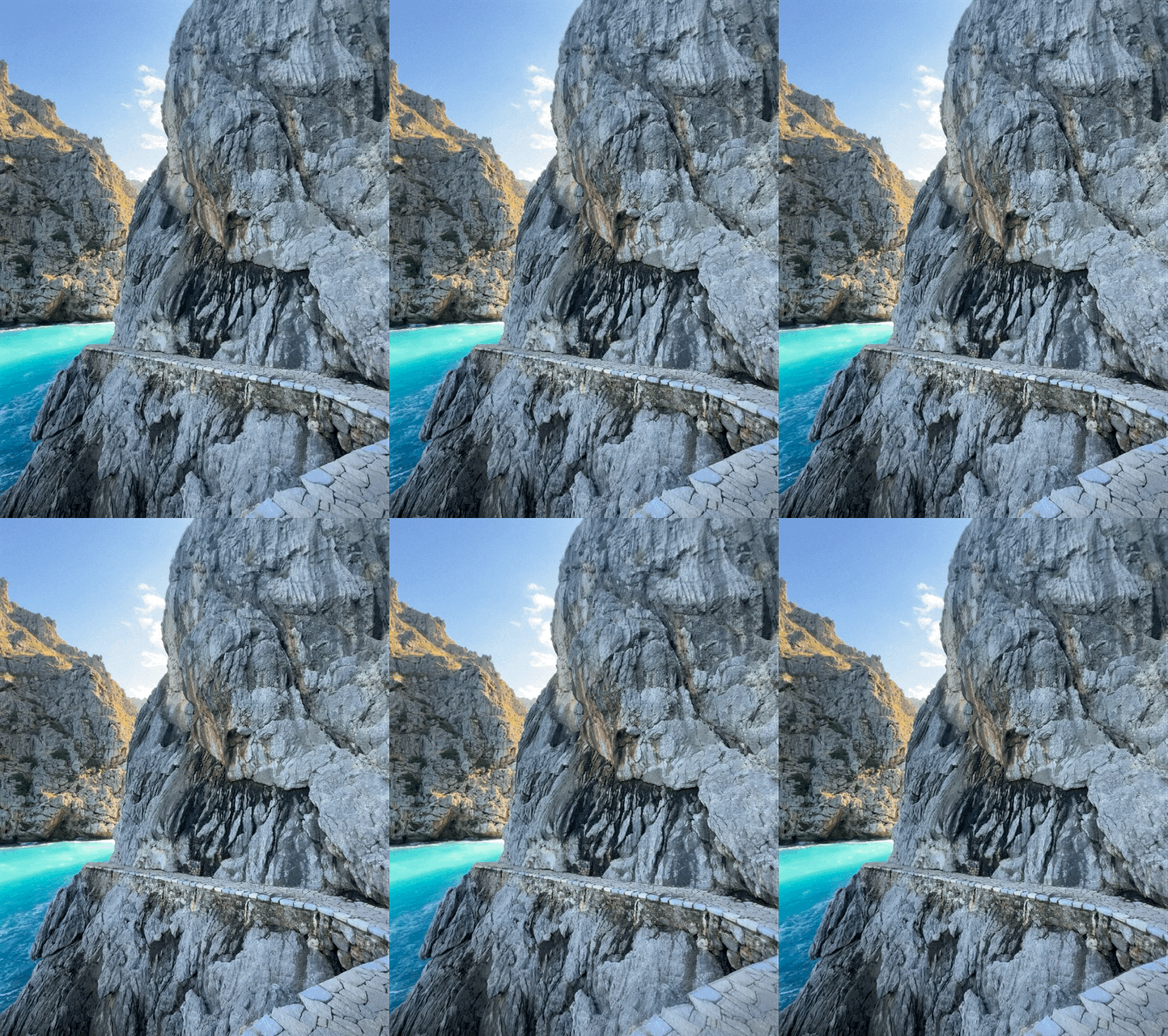
Top 2 MaLLorca Hikes That Completely Changed My View of the Island
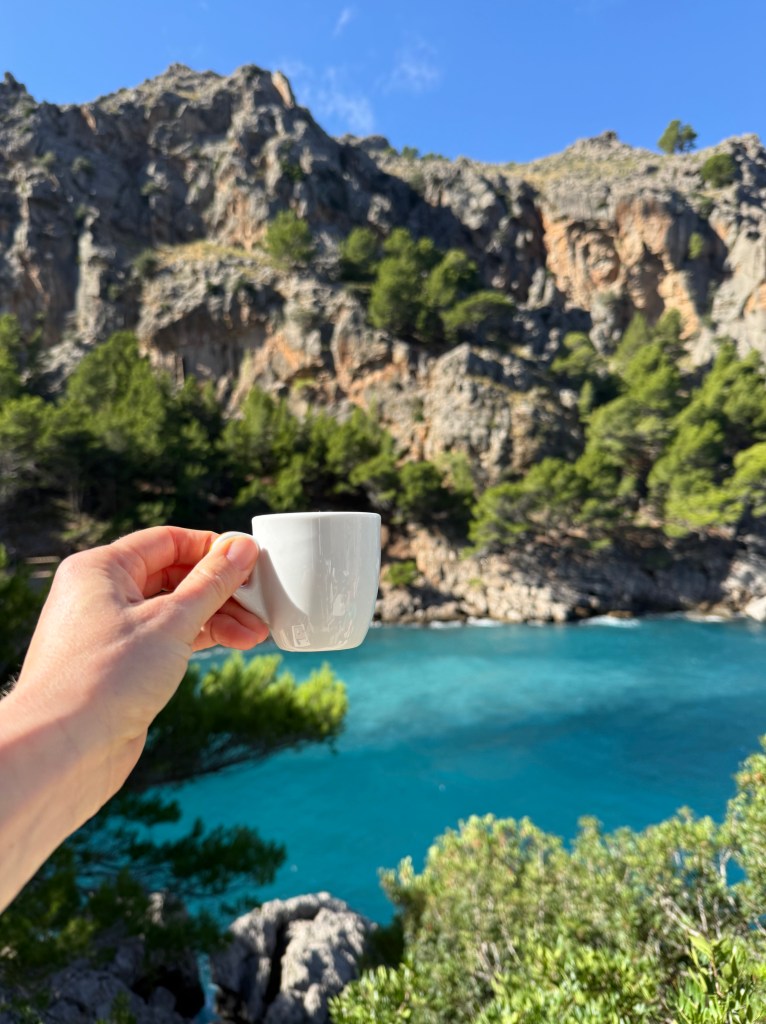
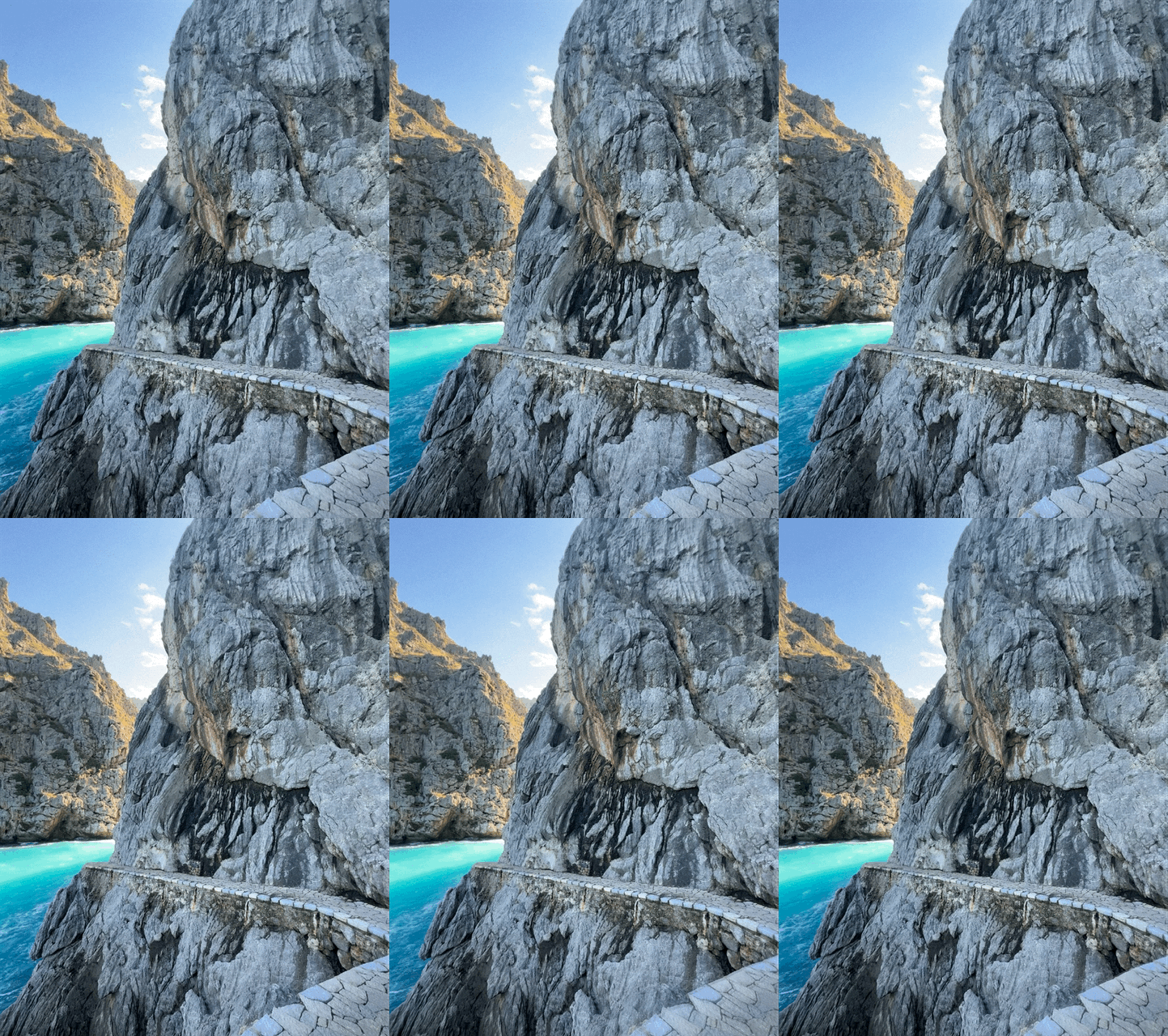

The first thing I do when planning a holiday is plan a hike. Wherever I am, whatever the season, I always make time to explore on foot. Even when I’m away with friends, I’ll often slip out early in the morning—usually before anyone else has woken—to find a trail.
I usually use the AllTrails app to filter routes by view, distance and terrain, choosing something that fits my mood and time restrictions, both of which can be compromised at times!.
On my recent trip, it was the mountains that kept drawing me in. Just a short drive inland, the island transforms completely into the Serra de Tramuntana—wild, quiet and full of unexpected beauty.
On this trip, I explored two very different hikes that showed me a side of Mallorca most visitors miss. One was a peaceful mountain walk near Alaró with sweeping views, near-empty trails and mountain donkeys close to Palma. The other was a dramatic canyon scramble on the west coast, where water, rock and cliffs created a completely different kind of adventure.
Both hikes were short enough to fit into a day, but neither felt small. They stayed with me long after the walk was over.
Why hike in Mallorca?
Mallorca is a diverse island that can only really be appreciated if you take the effort to visit some areas away from the densely populated towns.
I have visited Mallorca many times over the years, and today I’m going to share with you my favourite two hikes in the Serra De Tramuntana that changed my view of the island.
1. Castell d’Alaro hike
Starting inland, just 15 minutes from Mallorca’s main spine road (Ma-13A), this hike is surprisingly accessible while feeling wonderfully remote. Whether you’re staying in Palma or Alcúdia, both are roughly 28 minutes away, making this an easy half-day escape from the island’s busy beaches and tourist hotspots.
Getting there is part of the adventure! The mountain road features tight hairpin bends, narrow single-track sections and plenty of cyclists, so you’ll need to stay alert. If the hire car company offers an automatic upgrade, it might be worth considering!
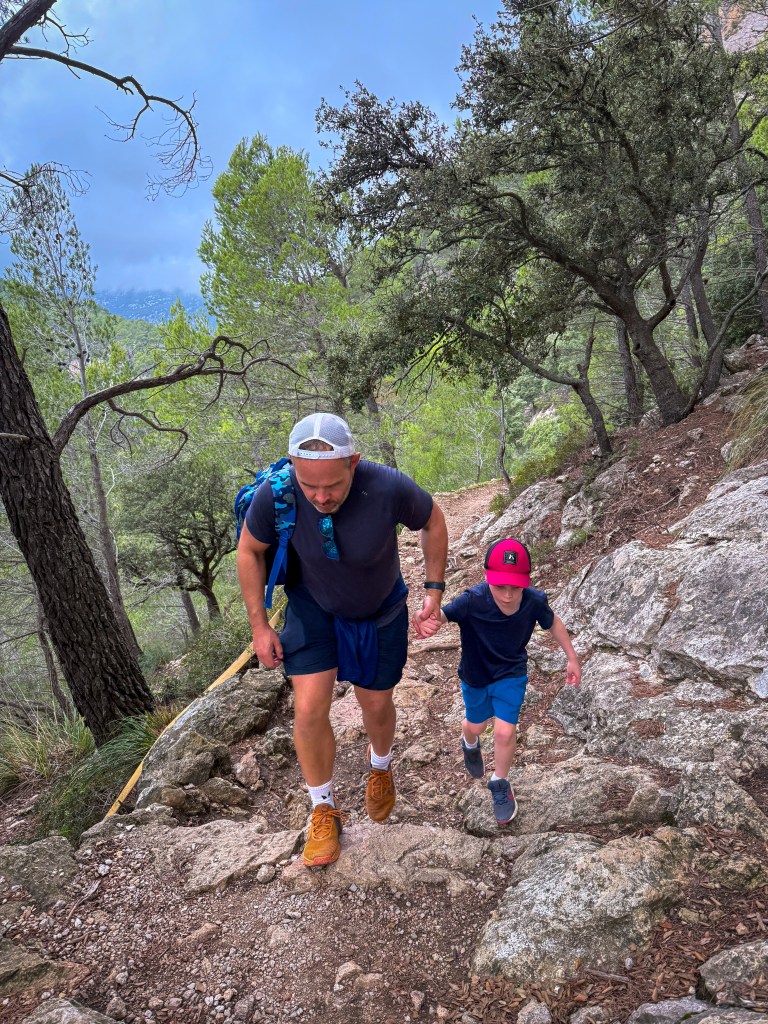
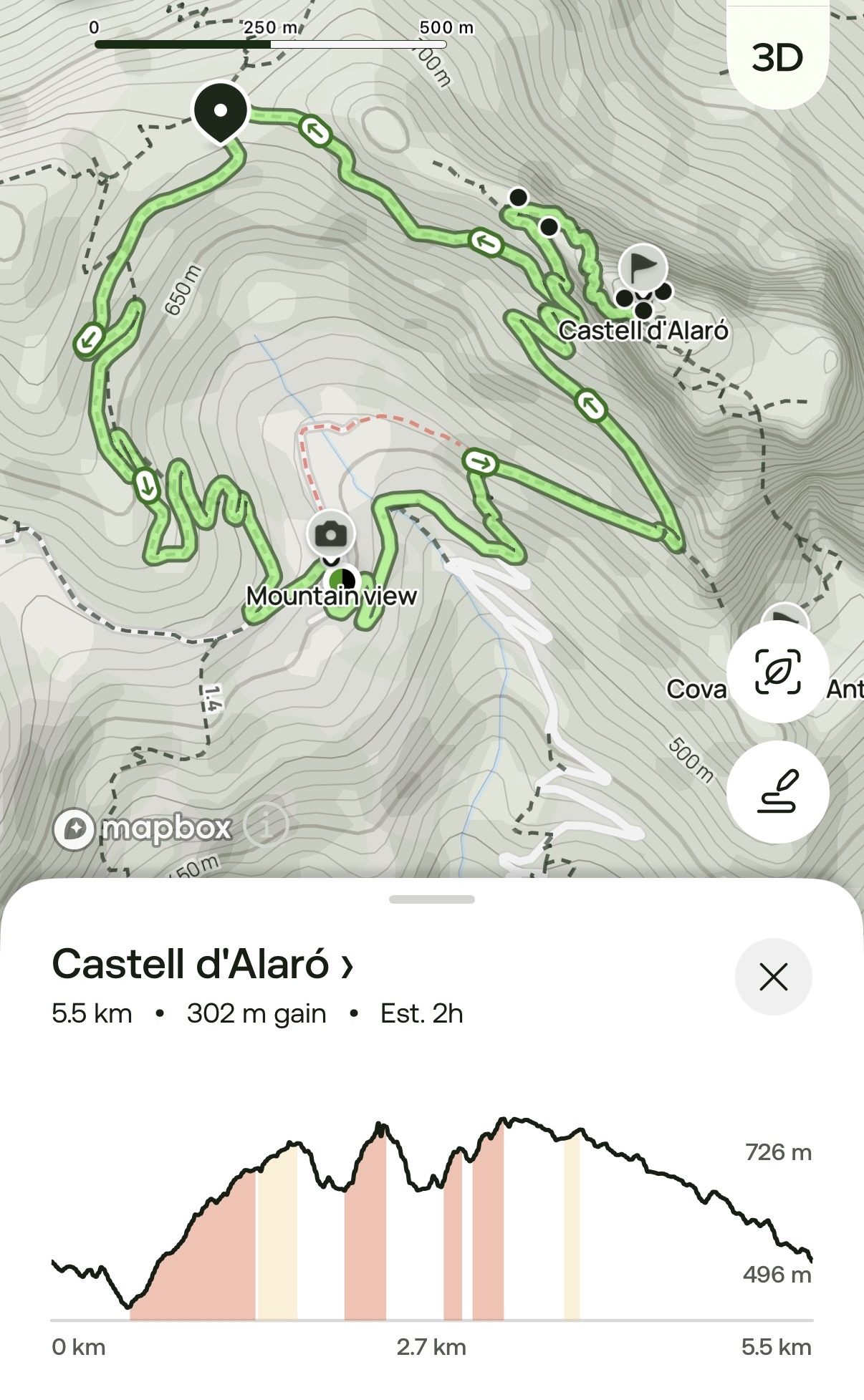
At just 6.2km, the hike can comfortably be completed in around two hours, with extra time for a coffee stop at the summit. It’s an ideal route if you’re short on time and surprisingly family-friendly too. I completed the walk with my three children, aged 12, 10 and 6, and all of them managed it with ease.
Before setting off, we stopped at Es Verger for a strong coffee. The rustic mountain restaurant offers parking and refreshments for before or after the hike. If you’re hoping for food, it’s worth checking the kitchen opening times in advance. Those looking for a longer route can start from Alaró and extend the hike from further down the mountain.
The trail climbs steadily along a rocky track, with frequent opportunities to stop and admire the views. As we gained height, the scenery became more impressive with every turn. What surprised me most was how quiet it was. Apart from one or two hikers at the summit, we had the mountain almost entirely to ourselves.
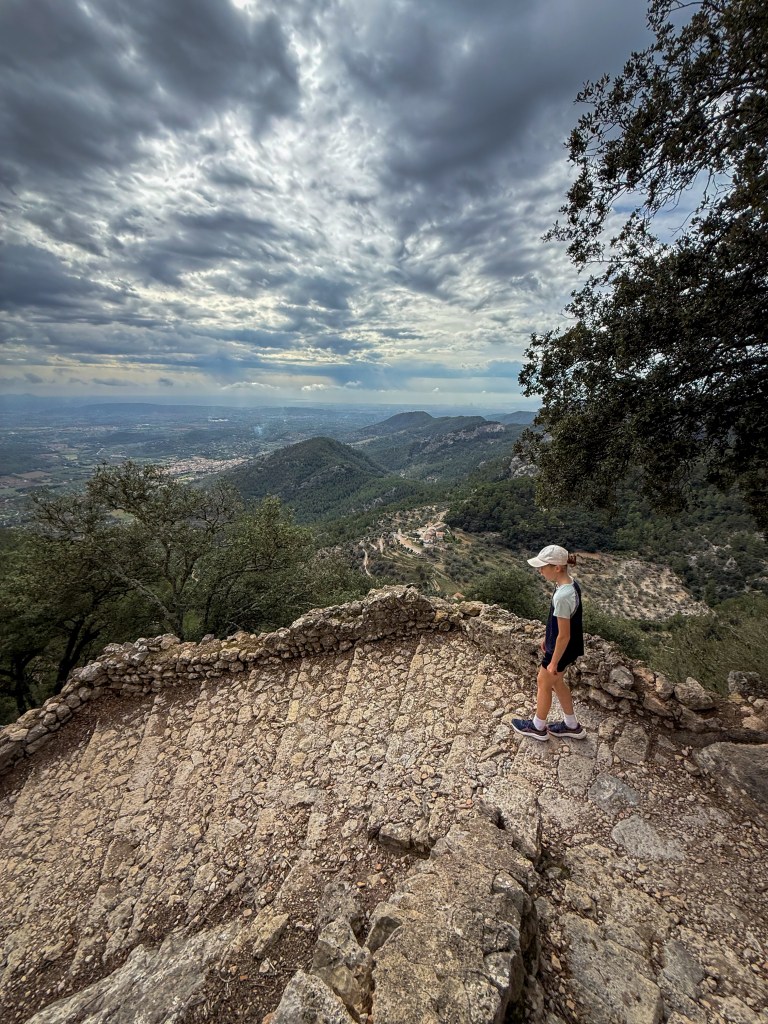
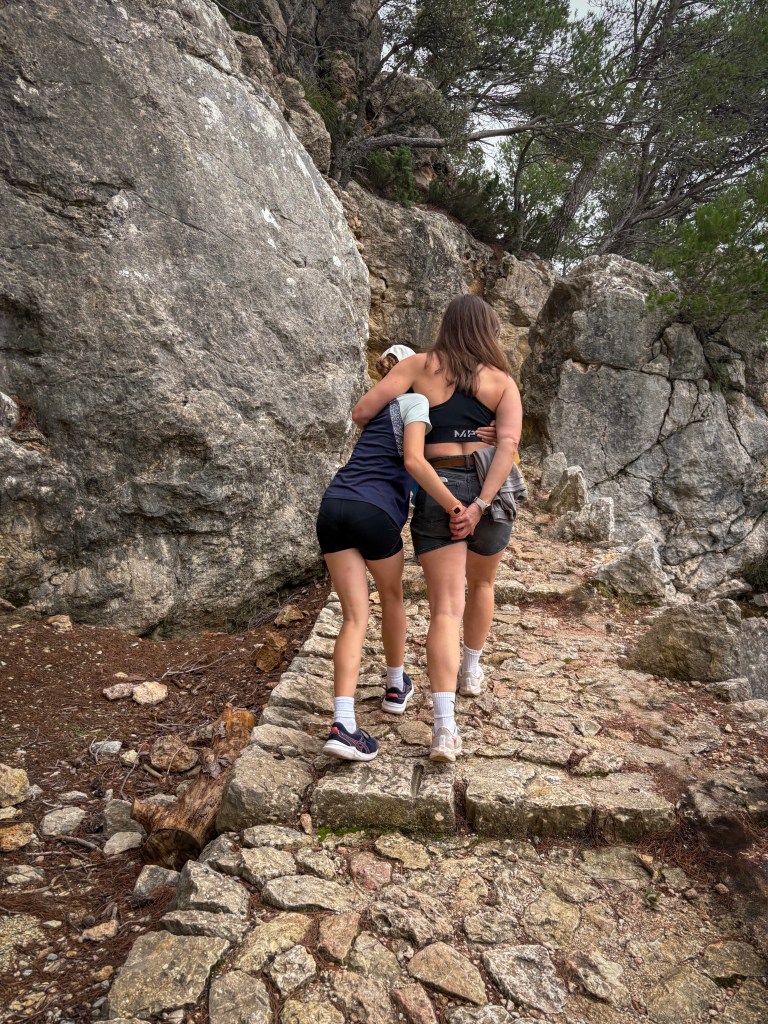
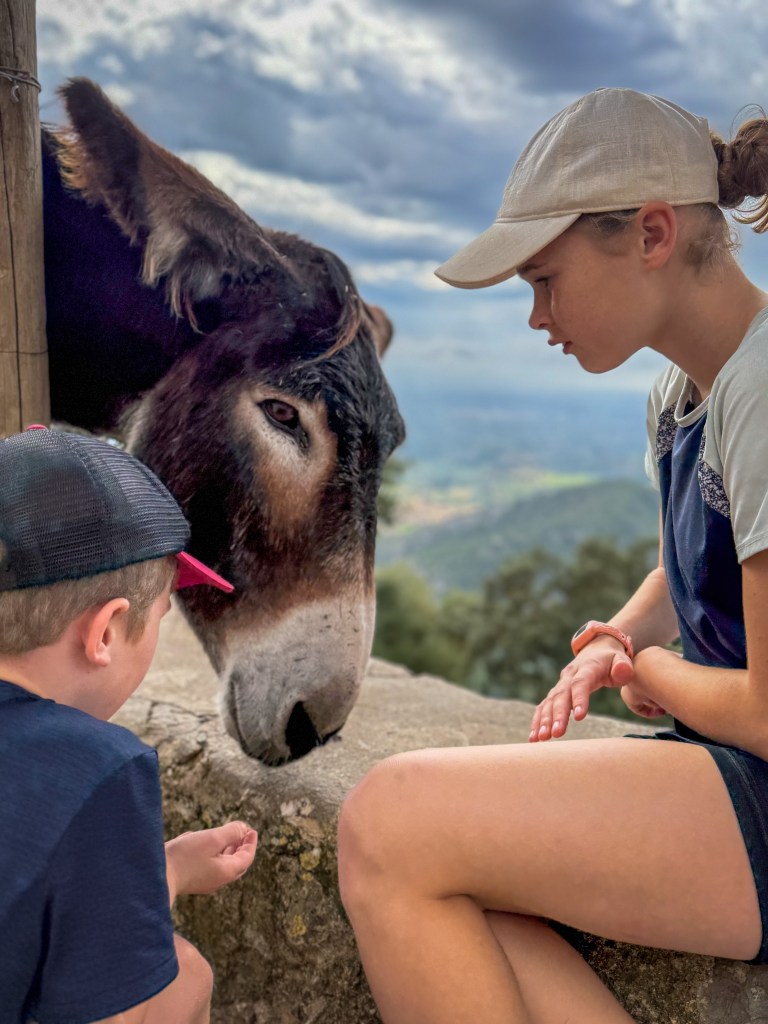
For my children, the highlight was meeting the mountain donkeys that help transport supplies to the summit. For me, it was the overwhelming sense of calm. Standing at the top, taking in the panoramic views of the Serra de Tramuntana, it felt a million miles away from the crowds of Palma and the busy hotel resorts.
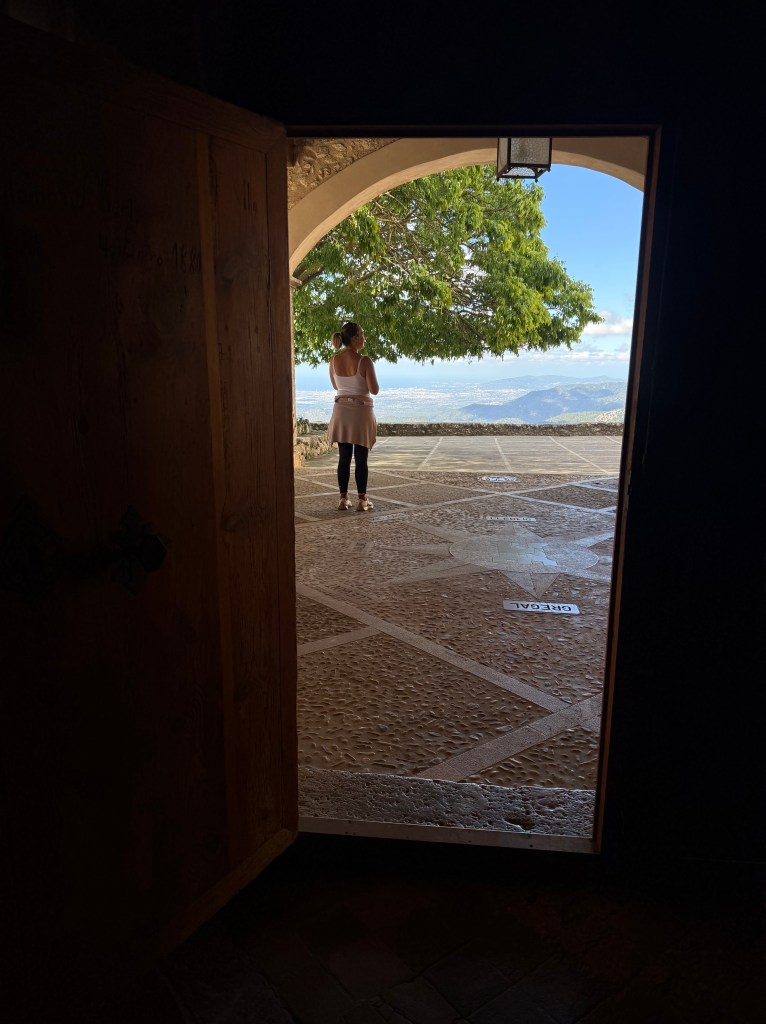
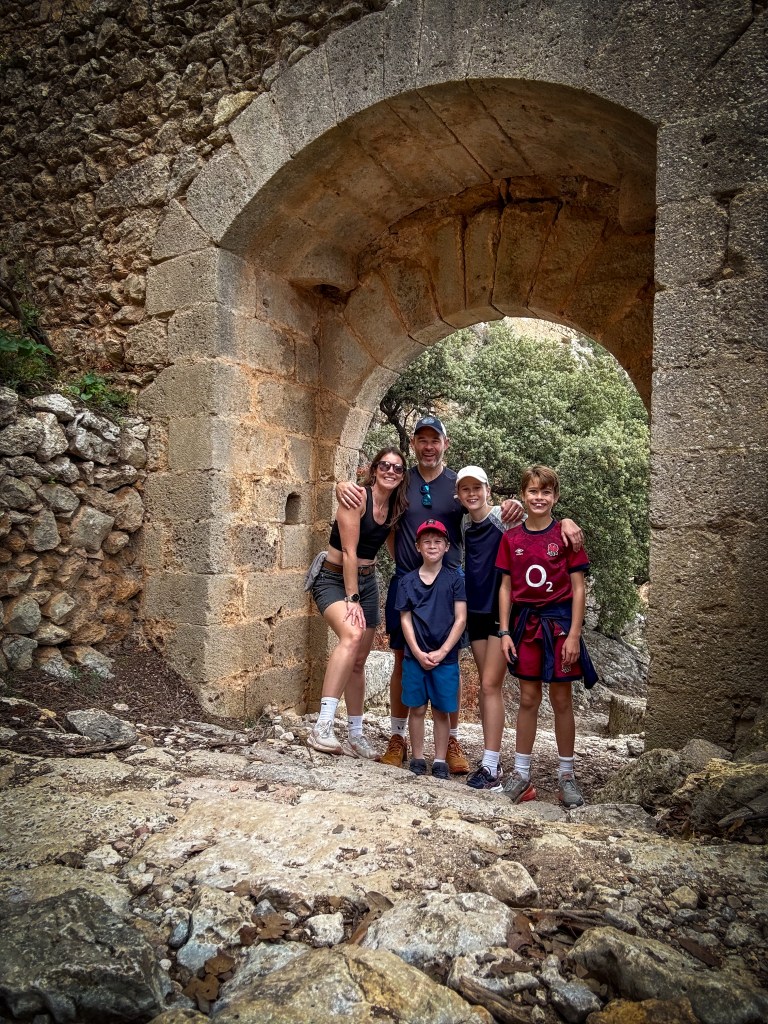
I’ve now completed this hike twice, once in October and again in May. Both visits were equally stunning, with beautiful scenery and remarkably quiet trails. If you’re looking for a short, rewarding hike that showcases a more peaceful side of Mallorca, this route is hard to beat.
Castell d’Alaro Hike Fact File:
- Parking: Free at Es Verger restaurant
- Distance: 6km
- Terrain: Rocky mountain paths
- Elevation: 822m
- Views: Mountain top vistas for miles around
- Refreshments: Food available at Es Verger, and at the Castel D’Alaro Refuge mountain top, seasonally and time dependant. Take cash with you as the mountain top doesn’t accept card.
- Essential tips: Wear sturdy close toed footwear. There are old stone paths that could get slippery. Carry all of your rubbish back down the mountain, as everything that goes up or down is via donkey!
2. Sa Calobra – Torrent de Pareis
Our second hike was another 6km route, this time on Mallorca’s dramatic west coast. Unlike the first walk, this is less of a traditional hike and more of a canyon scramble, involving water, rocks and a real sense of adventure. The breathtaking landscape of Torrent de Pareis will completely change your perception of Majorca if your only experience of the island is package holidays and resort beaches.
Getting to the start point is an adventure in itself. The drive takes you across the Serra de Tramuntana mountains via one of Mallorca’s most iconic roads, featuring 26 hairpin bends and spectacular views around every corner. From Inca, the journey takes around an hour, while Palma is closer to an hour and a half away. There are no tunnels cutting through the mountains here – just endless twists and turns that demand your full attention.
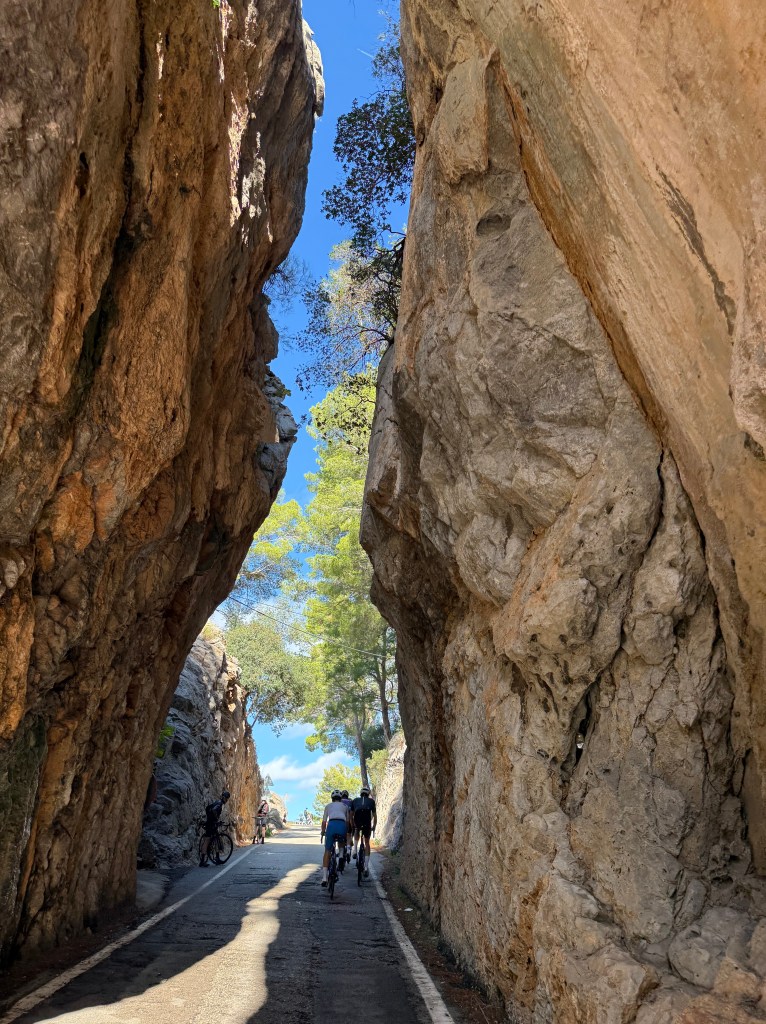
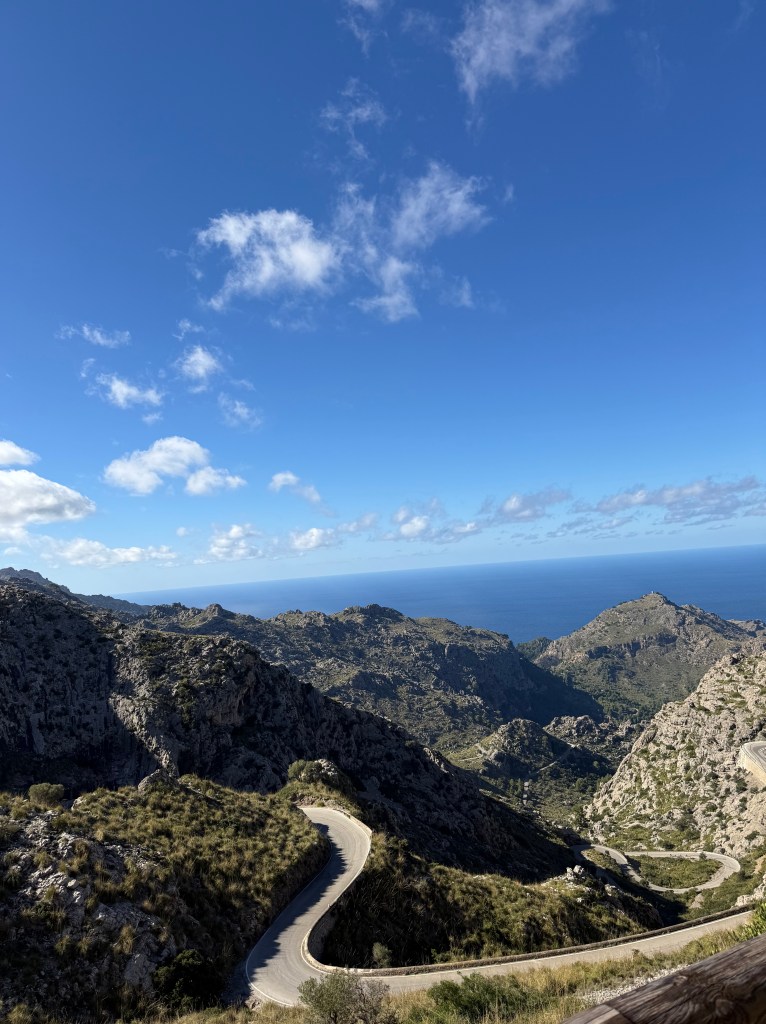
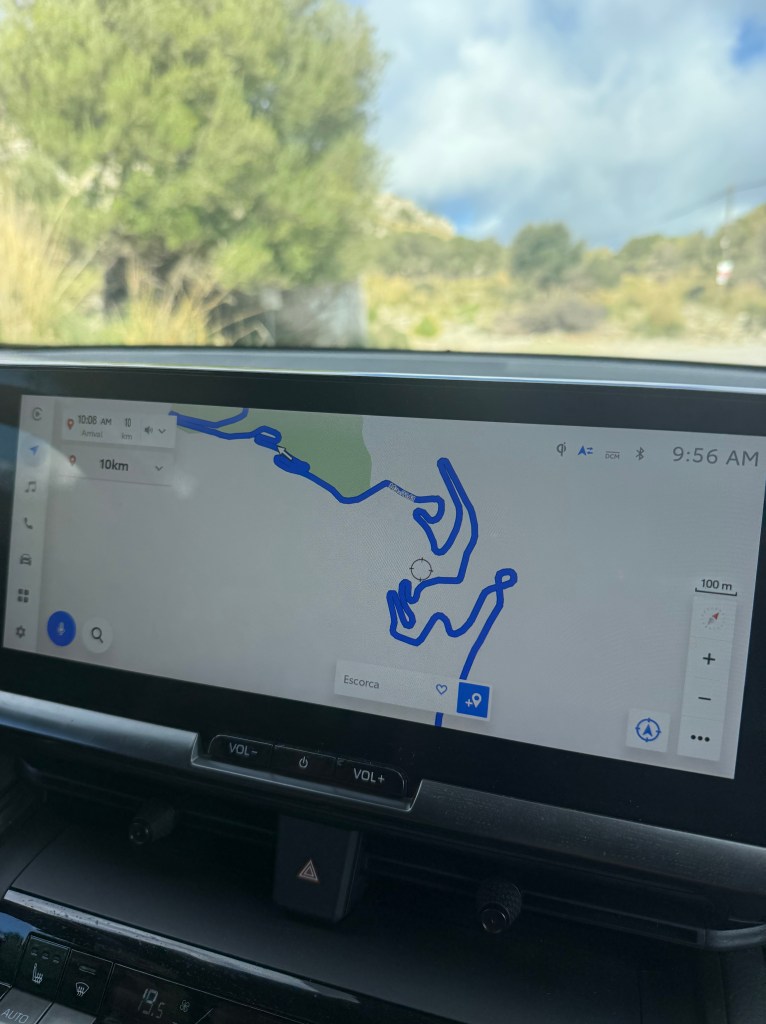
We travelled early on an October morning when the roads were quiet, and I would strongly recommend doing the same. After 9am, particularly during peak season, the route becomes much busier with tourists, coaches and cyclists. It’s one of Europe’s most famous cycling roads, so expect to spend plenty of time behind riders tackling the climbs. Rather than getting frustrated, slow down, enjoy the scenery and admire their stamina.
The hike begins at Sa Calobra, where a large car park serves the busy village below. There are cafés and restaurants for refreshments before or after your walk, but this is one of the island’s most popular beauty spots, so arriving early is essential if you want to avoid the crowds and parking headaches.
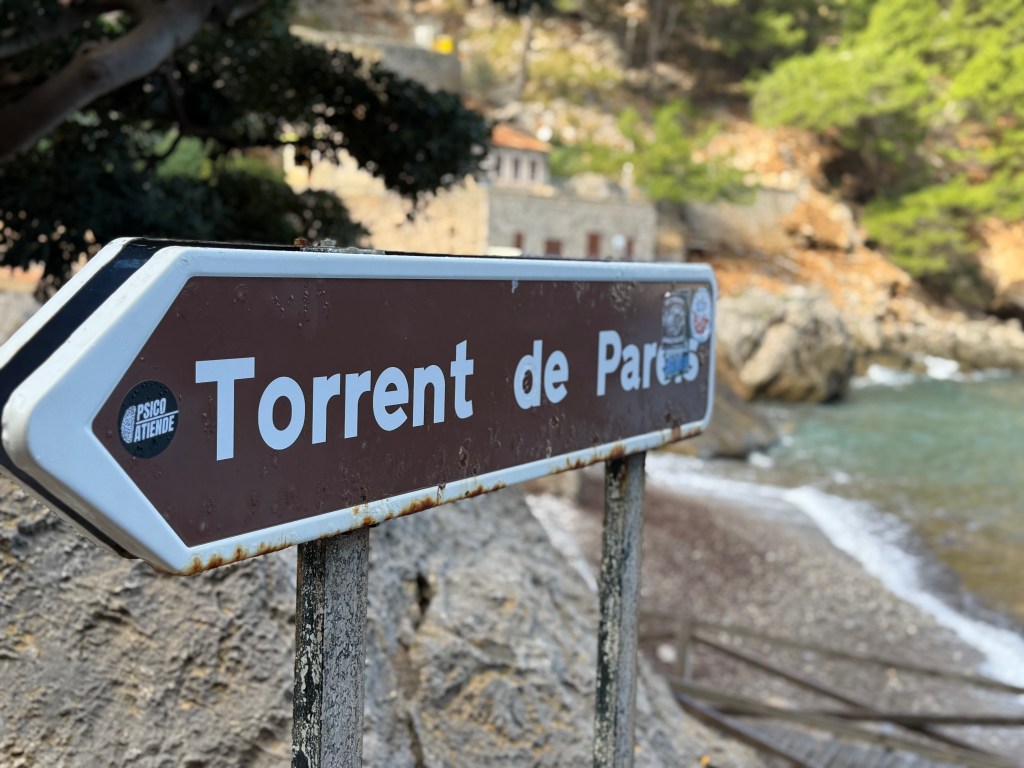
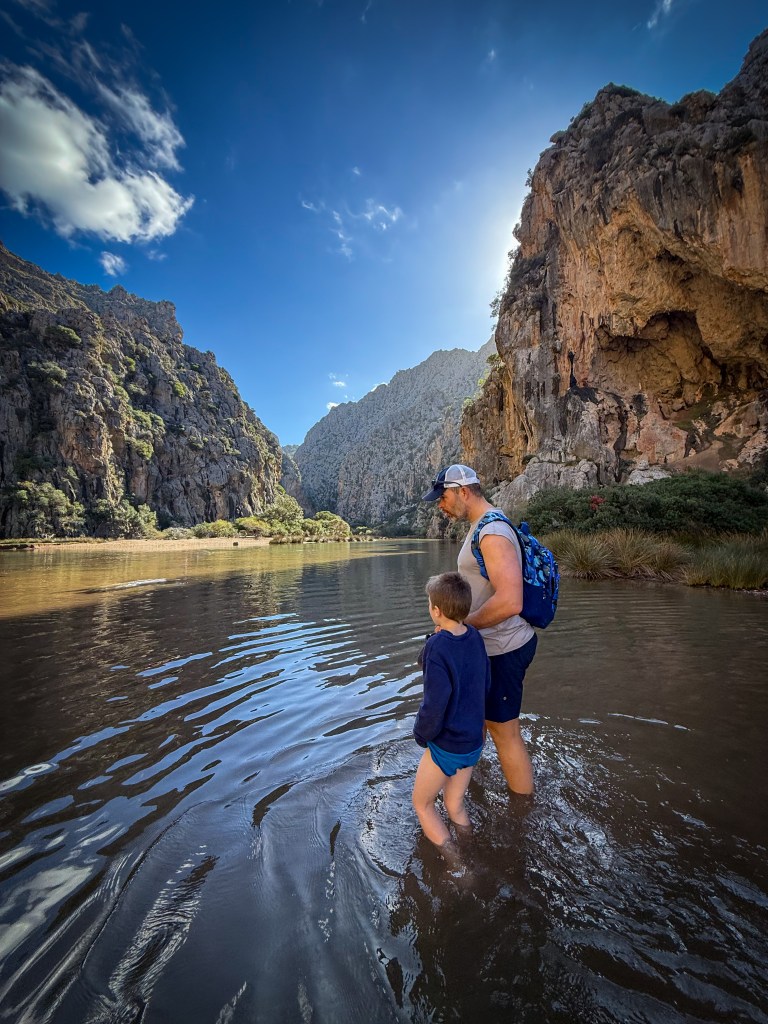
From the village, a short tunnel leads you into the spectacular Torrent de Pareis canyon. For many visitors, this incredible rocky landscape is the destination itself. For us, it was just the beginning. Pulling on our water shoes, we left most of the tourists behind and followed the water inland through the canyon.
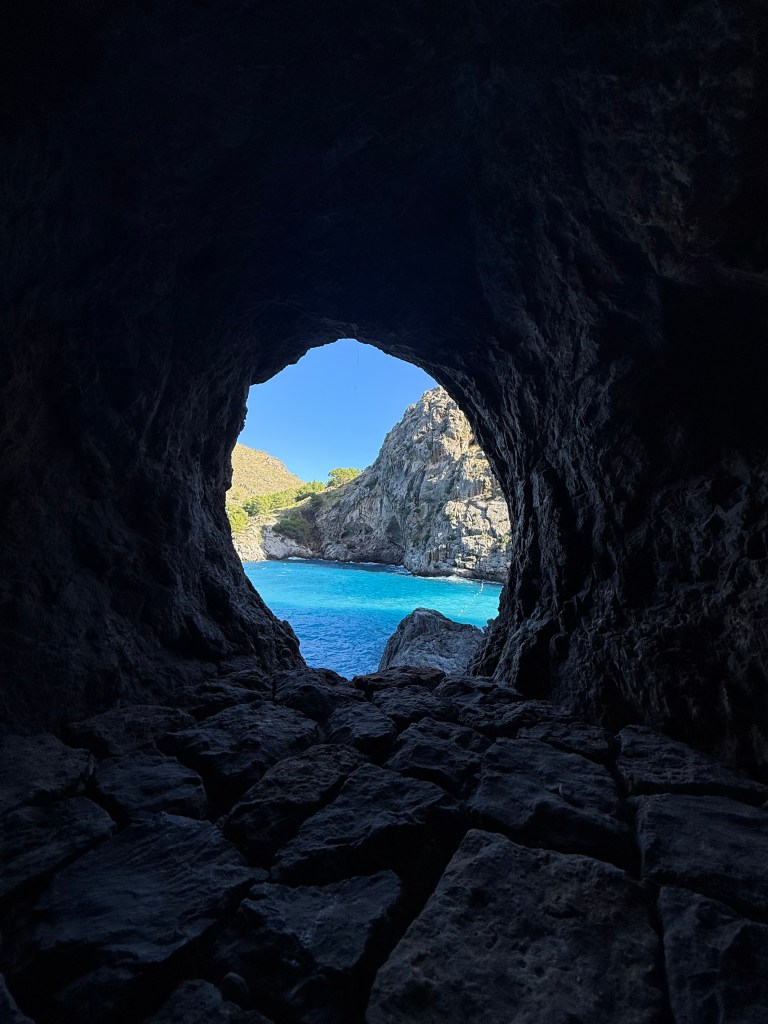
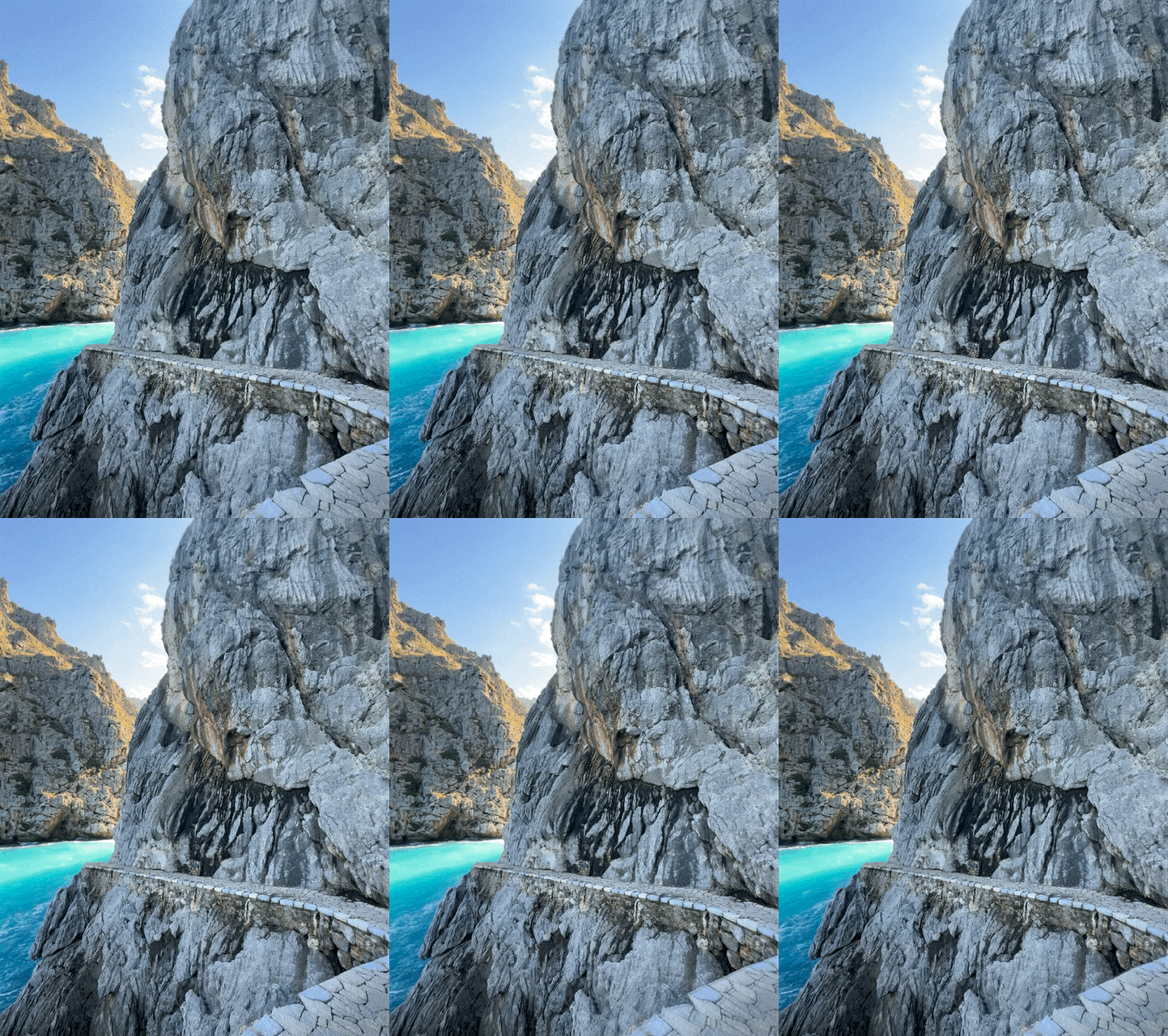
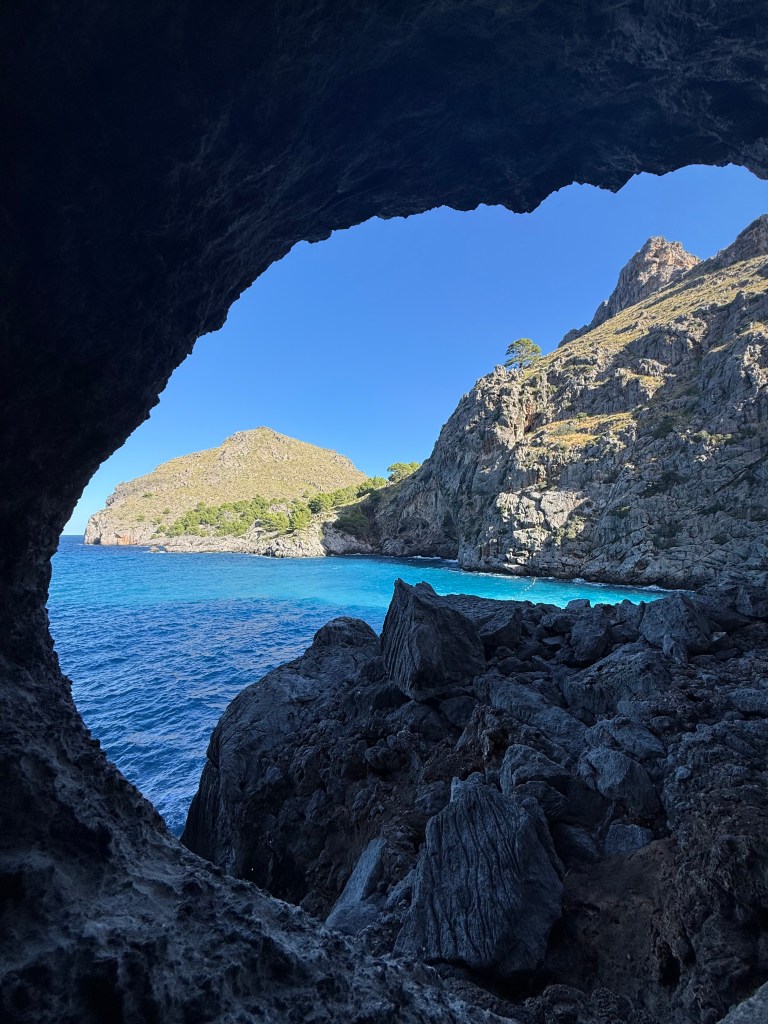
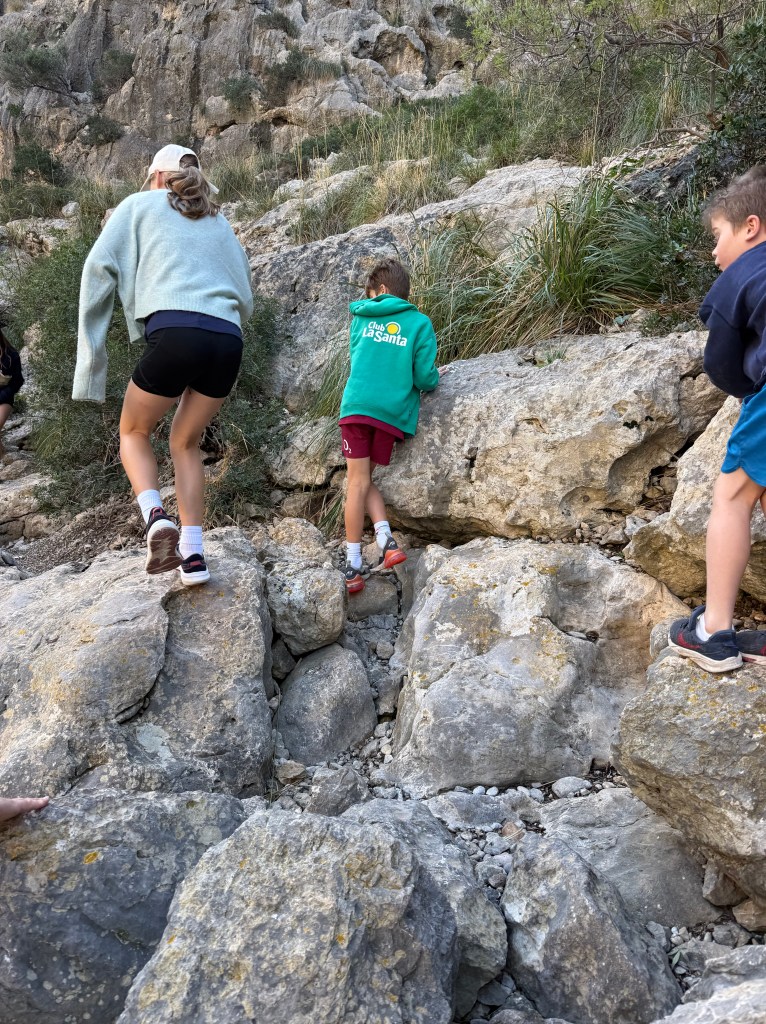
We scrambled over rocks, waded through pools and explored as far as we safely could. Eventually the route became more technical, and without ropes – and with a six-year-old adventurer in tow – we decided it was time to turn back. It’s definitely a hike we’ll return to when the children are older.
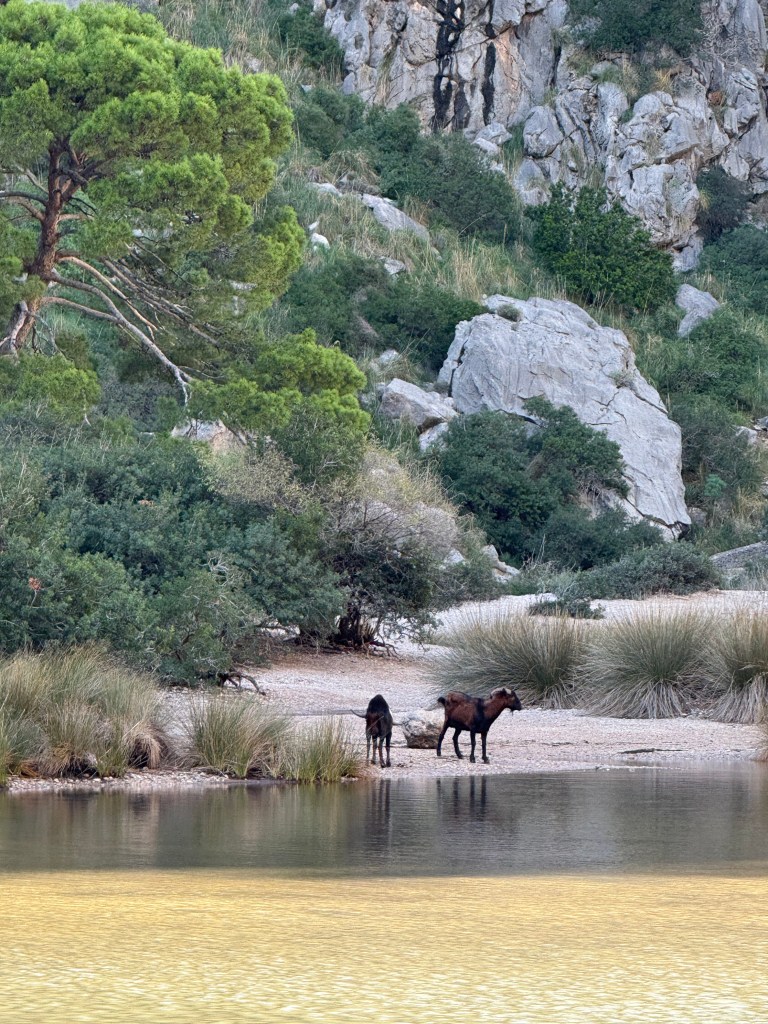
Although this route was busier than our Alaró hike, it still felt surprisingly peaceful once we left the main tourist areas behind. Along the canyon there were plenty of quiet spots to stop for a picnic, often with only the local goats for company. Including the drive, this is very much a full-day adventure, but one that showcases a completely different side of Mallorca.
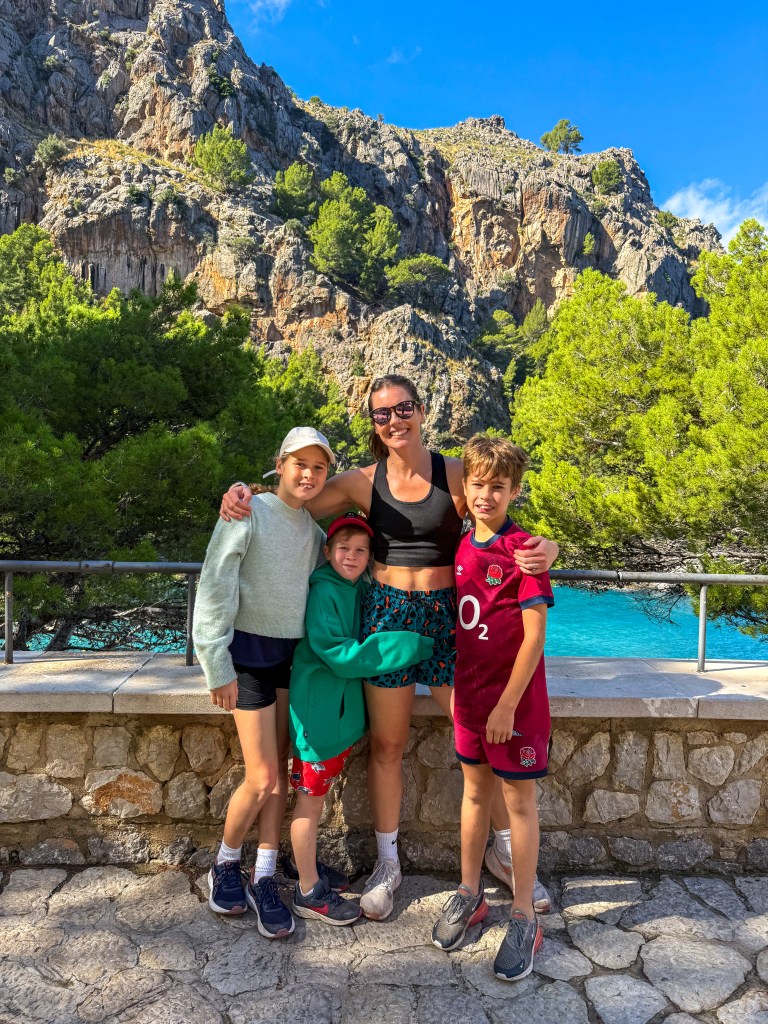
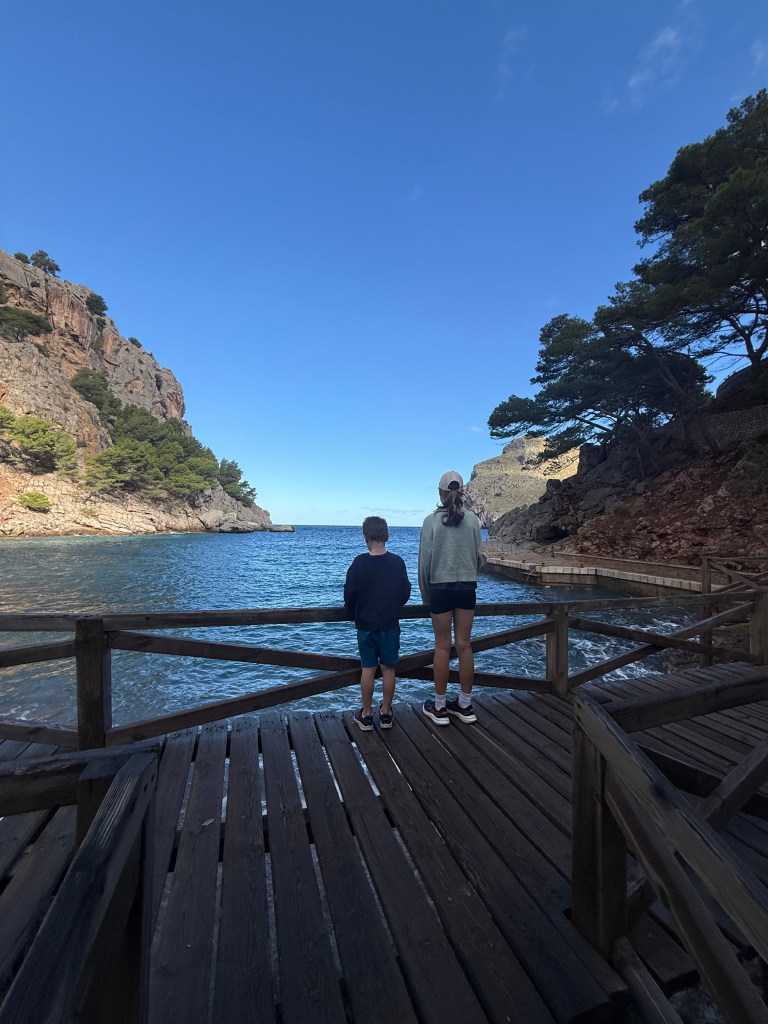
Sa Calobra – Torrent de Pareis Hike Fact File:
- Parking: Pay on Exit Car Park, Sa Calobra Village
- Distance: 6km
- Terrain: Rocky river bed, large rock scramble.
- Elevation: 200m
- Views: Humbling canyon views, with breathtaking turquoise waters.
- Refreshments: Food and drinks available in Sa Calobra village. No facilities beyond this.
- Essential tips: Wear sturdy footwear, and be prepared to get wet! Take water shoes for large stretches of river walking, and spare clothes if you have kids with you; someone will end up in the water! If you want more of a challenge, be prepared to scramble rocks and level up the hike.
Practical Tips for Hiking in Mallorca
- Start early Both hikes are best done early in the morning, especially in warmer months. Roads and trails are quieter, temperatures are cooler, and parking is much easier at popular spots like Sa Calobra.
2. Be confident with mountain driving
Many routes involve narrow, winding roads with hairpin bends and shared space with cyclists. Take your time, avoid rushing, and consider an automatic hire car if you’re not comfortable with manual gear changes on steep inclines.
3. Bring proper footwear
Even on shorter hikes, terrain can be rocky, uneven or wet underfoot. For canyon routes like Torrent de Pareis, water shoes or trainers you don’t mind getting wet are essential.
4. Check facilities in advance
Mountain restaurants such as Es Verger may have limited opening hours or reduced service outside peak times. Don’t assume full meals will always be available, especially early in the day or off-season.
5. Expect limited phone signal
In more remote sections of the Serra de Tramuntana, signal can drop quickly. Download maps offline and don’t rely on navigation once you’re deep into the mountains.
6. Pack water and snacks
Even shorter hikes can feel more demanding in heat or uneven terrain. Carry more water than you think you’ll need, especially if hiking with children.
7. Respect the conditions
Canyon hikes can become technical depending on water levels. If you’re unsure, turn back early rather than pushing into unsafe terrain. Conditions can change quickly after rain.
8. Avoid peak crowds where possible
Sa Calobra and Torrent de Pareis can get extremely busy in high season, especially when coaches arrive mid-morning. Early starts or shoulder seasons (spring and autumn) offer a far more enjoyable experience if you are like me and aim to avoid human folk!
9. Take your time
These hikes are as much about the journey as the destination. The views, wildlife and quiet moments often end up being the most memorable parts. Take a picnic and snacks and make regular stops.
If you ask any member of my family what the most memorable part of our recent trip to Mallorca was, they will mention one of these hikes. From peaceful mountain paths to dramatic canyon scrambles, each walk offered something unique, but both left us with the same feeling: stillness, space, and a reminder of how powerful it is to explore a place on foot.
It’s often these early morning escapes, when the world is still quiet, that end up becoming the most memorable parts of any trip.

 Smart Travel Edit
Leave a comment